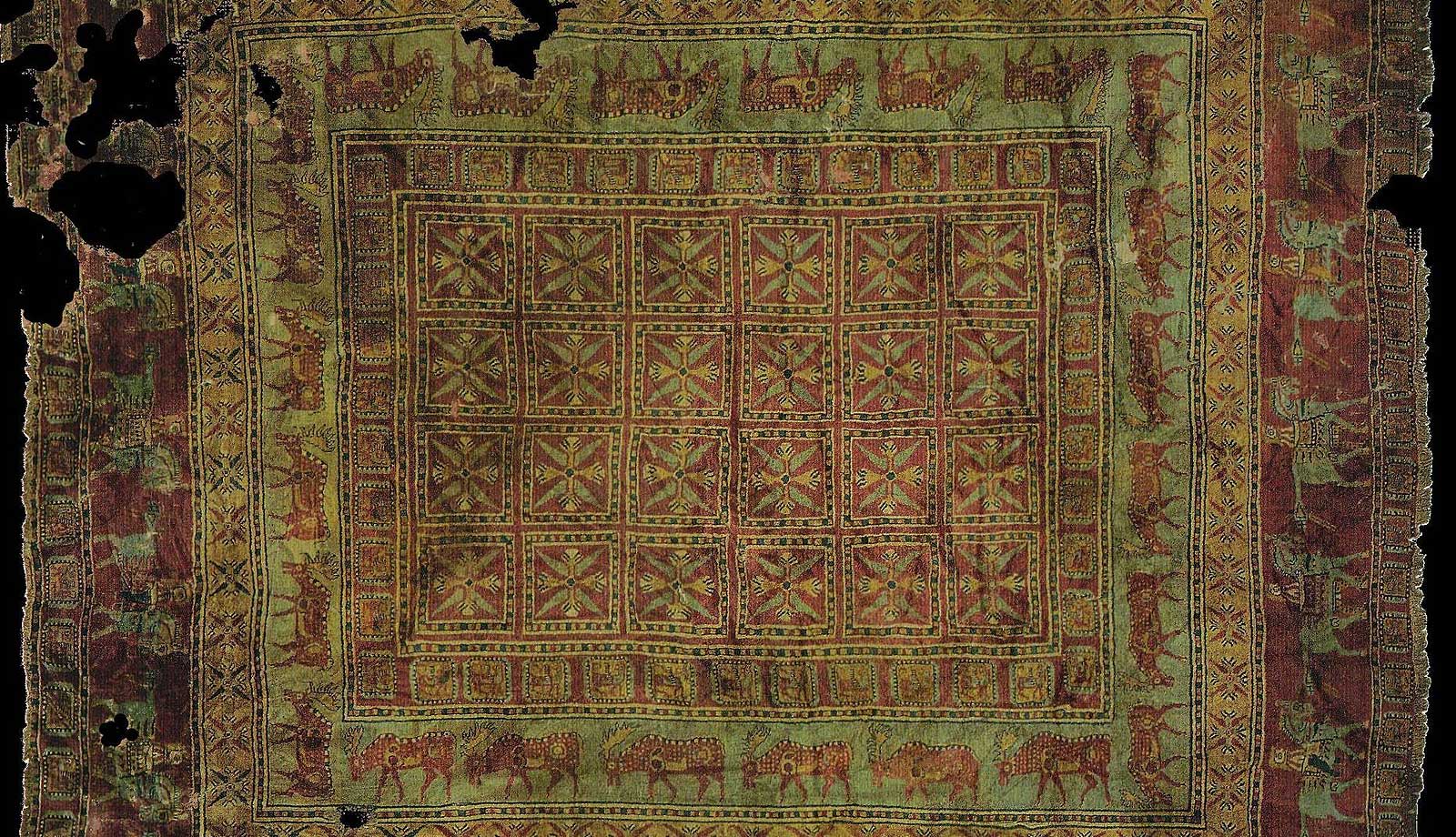
The Pazyryk carpet, woven around the 4th century BC, is the oldest known hand-knotted Persian rug. Discovered in 1949 by Professor Rudenko in a frozen Scythian tomb in Siberia, this remarkable artifact offers a captivating glimpse into ancient artistry and culture.
Dating back approximately 2,500 years, the carpet was found in the tomb of a Scythian nobleman, providing valuable insights into burial practices of the time. While it was unearthed in Siberia, scholars believe it is of Persian origin due to its intricate design and weaving techniques, which resemble those seen in Persepolis sculptures. The carpet measures 183 by 200 centimeters (72 by 79 inches) and features a high knot density of 36 symmetrical knots per square centimeter, showcasing advanced weaving skills.
Its design includes a central field adorned with cross-shaped ornaments, bordered by dynamic scenes of horsemen and deer, reflecting the cultural values and natural world of the era.
The Pazyryk carpet is not merely an artistic masterpiece; it serves as a vital link to understanding the beliefs and practices of ancient civilizations. As the oldest surviving example of a pile-knotted oriental rug, it underscores the enduring legacy of textile art and the rich narratives that continue to shape our world today.
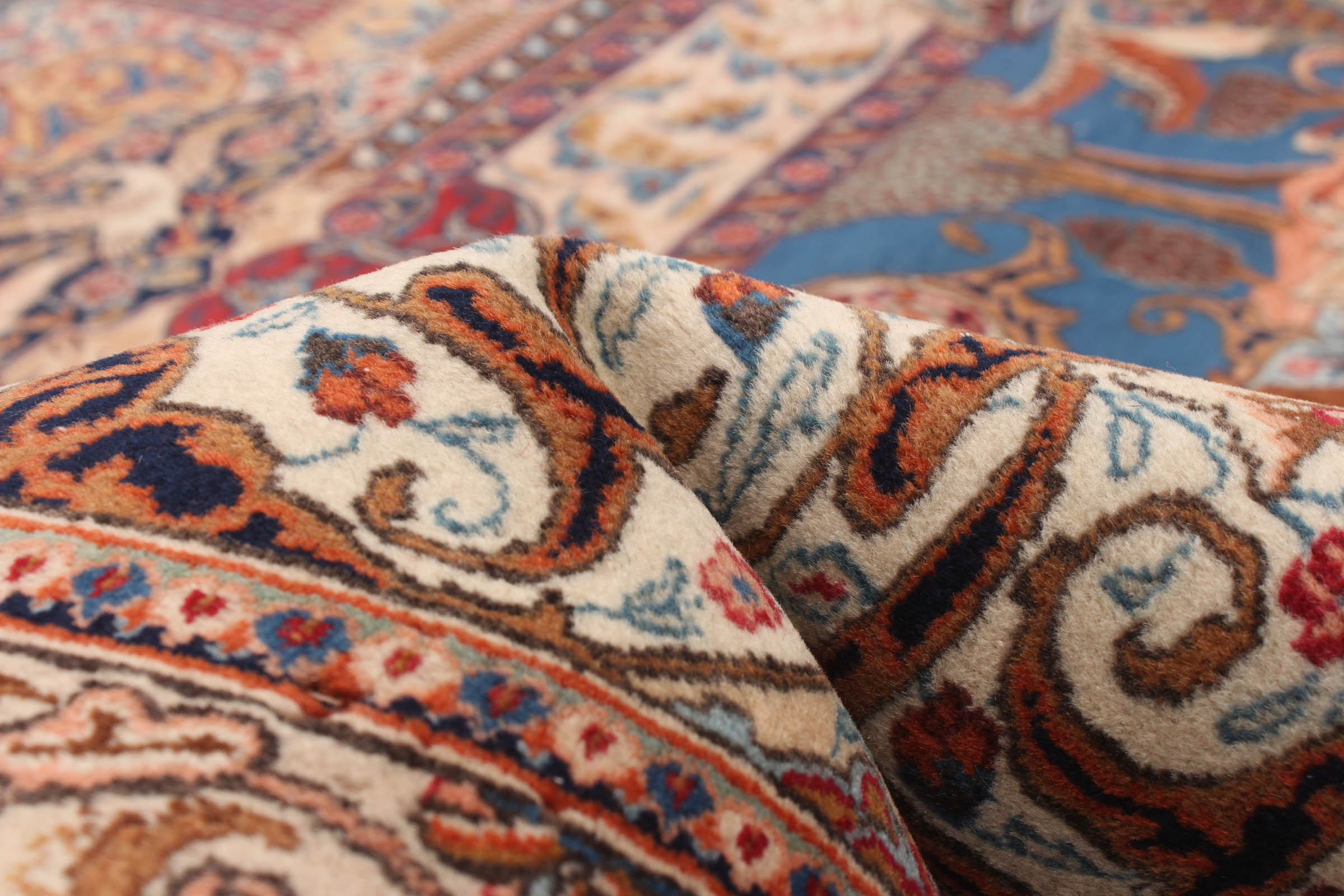
Do you have a Persian Rug you wish to have deep cleaned or restored?
Contact us on +356 7711 3050.
Visit Our Online Shop at www.bufferboys.com/shop or email on [email protected].